The 3 Donor Types Only the ED Can Help An Org Reach
Why diversifying funders matters more than diversifying funding — and why your development team can't do it alone.
Somewhere in America tonight, a board member is raising their hand and saying the organization needs to diversify its revenue.
It sounds responsible. And in our sector, it's nearly universal advice. But research from the Stanford Social Innovation Review suggests it might also be the advice quietly limiting our growth.
This post is about three donor types most development teams aren't built to reach — and why building for them isn't a fundraising problem. It's a leadership one.
It's also a big part of what the new Proimpact ED System course is built around. More on that below.
The Proimpact ED System — a free course built for nonprofit EDs who want the belief shifts, strategies, and tactics that actually move organizations forward.
The Stanford Data That Quietly Reframes the Whole Conversation
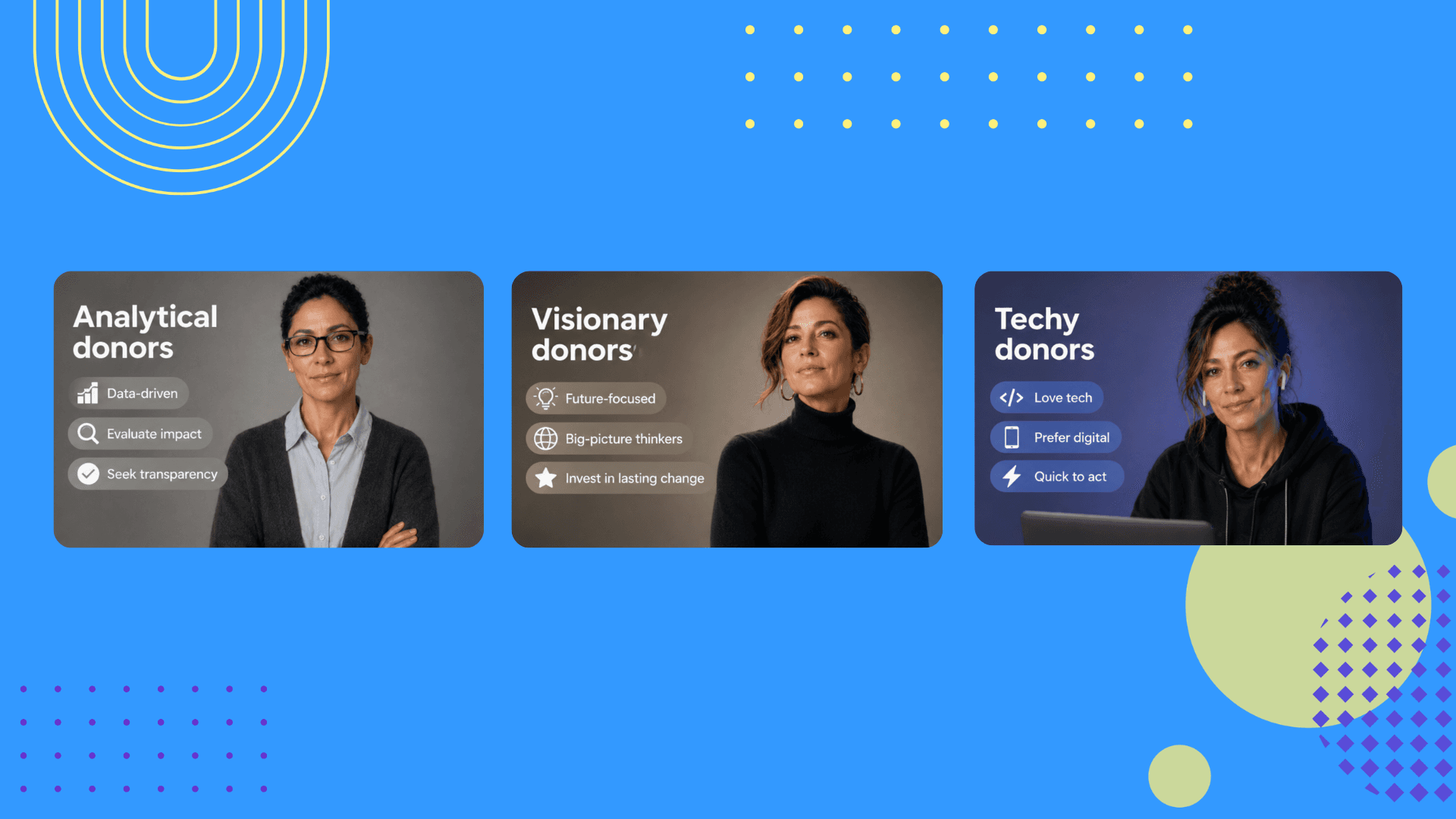
Since 1970, more than 200,000 nonprofits have been founded in the United States.
Only 144 of them have ever broken $50 million in annual revenue.
Stanford studied that group. They redid the study in 2024 just to make sure the pattern still held. It did. And the finding was the opposite of what most of us have been told for decades.
About 90% of the high-growth nonprofits in the Stanford study got the bulk of their funding from one dominant source. Not three. Not four. One.
Here's the contrast in plain terms:
The advice everyone hears: Build a three-legged stool of grants, major gifts, and monthly giving. Spread the risk.
What the data shows: High-growth orgs concentrate. They pick the channel they're best at and get genuinely good at it.
The McDonald's analogy is useful here. McDonald's didn't grow by selling Lexus cars alongside burgers. They grew by adding breakfast. By adding healthier options. By going after new audiences for the same fundamental thing they already did well.
Different revenue streams aren't different products. They're different business models — different staff, different timelines, different systems, different everything.
So the reframe is small but consequential.
Not diversify funding. Diversify funders.
That distinction is the hinge for everything that follows.
Why This Is the ED's Job (Not Your Development Team's)
Most fundraising content treats donor diversification as a development team problem.
It isn't. At least not entirely. And the reason is structural.
Development teams can do brilliant work. Most of them already are. They:
Tell strong stories
Build emotional appeals that convert
Run direct mail, events, and donor cultivation
This is the donor type the sector has spent decades getting good at — what we'd call the emotional donor. And most development shops are genuinely great at reaching them.
But here's what dev teams can't create on their own:
An efficient program model — that's a programs and operations decision
An ambitious organizational vision — that's set at the top
A technology roadmap — that's a leadership-level investment call
Each of those is the substance behind a different donor type's interest. The development team can carry that messaging beautifully once it exists. They just can't conjure it from nothing.
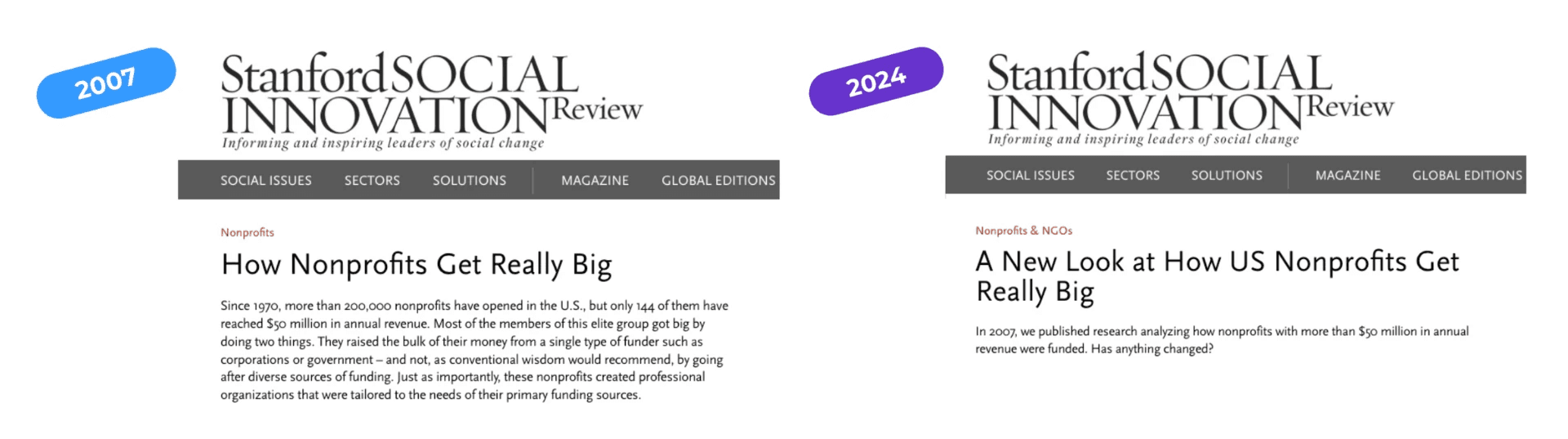
Which means three of the most overlooked donor types in our sector aren't a fundraising problem. They're a leadership one.
It's also the part of the equation the Proimpact ED System course was built to address — building the org-wide substance that lets your development team invite more donors into the work.
This is exactly the gap the Proimpact ED System was built to close — helping EDs build the org-wide substance that lets your development team invite more donors into the work.
The Donor Most Nonprofits Are Already Reaching
Before the three, a quick note on the one our sector already knows well.
The emotional donor is the most familiar persona in fundraising. Their messaging comes from:
Strong stories
Visible impact
Mission resonance
This is the donor most development teams have been built to reach for decades. And often, they're terrific at it.
If we're being honest, this is the only persona most nonprofits are systematically built to reach. The next three are where most growth opportunities are quietly sitting.
Donor Type 1 — The Analytical Donor
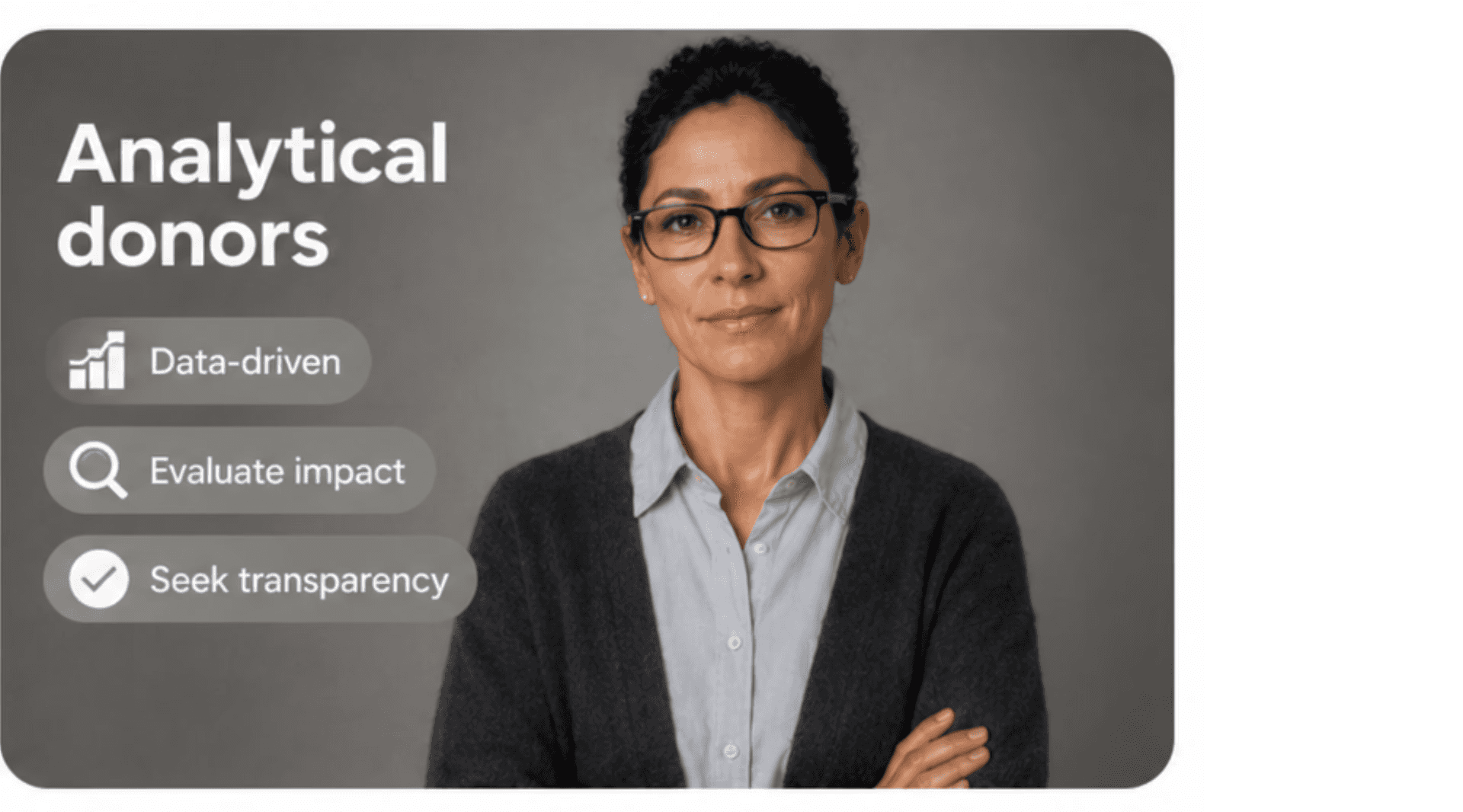
Analytical donors aren't unmoved by stories. They just need the math too.
These are the donors who pull your 990 before the first meeting. They divide your expenses by your impact and want to talk about cost per outcome. They're not skeptical — they're just wired for evidence.
Their messaging comes from:
Your data — what you measure and why
Your efficiency — cost per outcome, dollars-to-impact ratios
Your theory of change — the logical chain from input to outcome
A quick anchor from our own time as an ED at CoachArt. We built an app that took the average volunteer-matching time from over seven hours to under seven minutes. Cost per lesson dropped by about 70% over the next six years. And our theory of change tracked five specific socio-emotional metrics tied to each child's progress. Not vibes. Actual measurement.
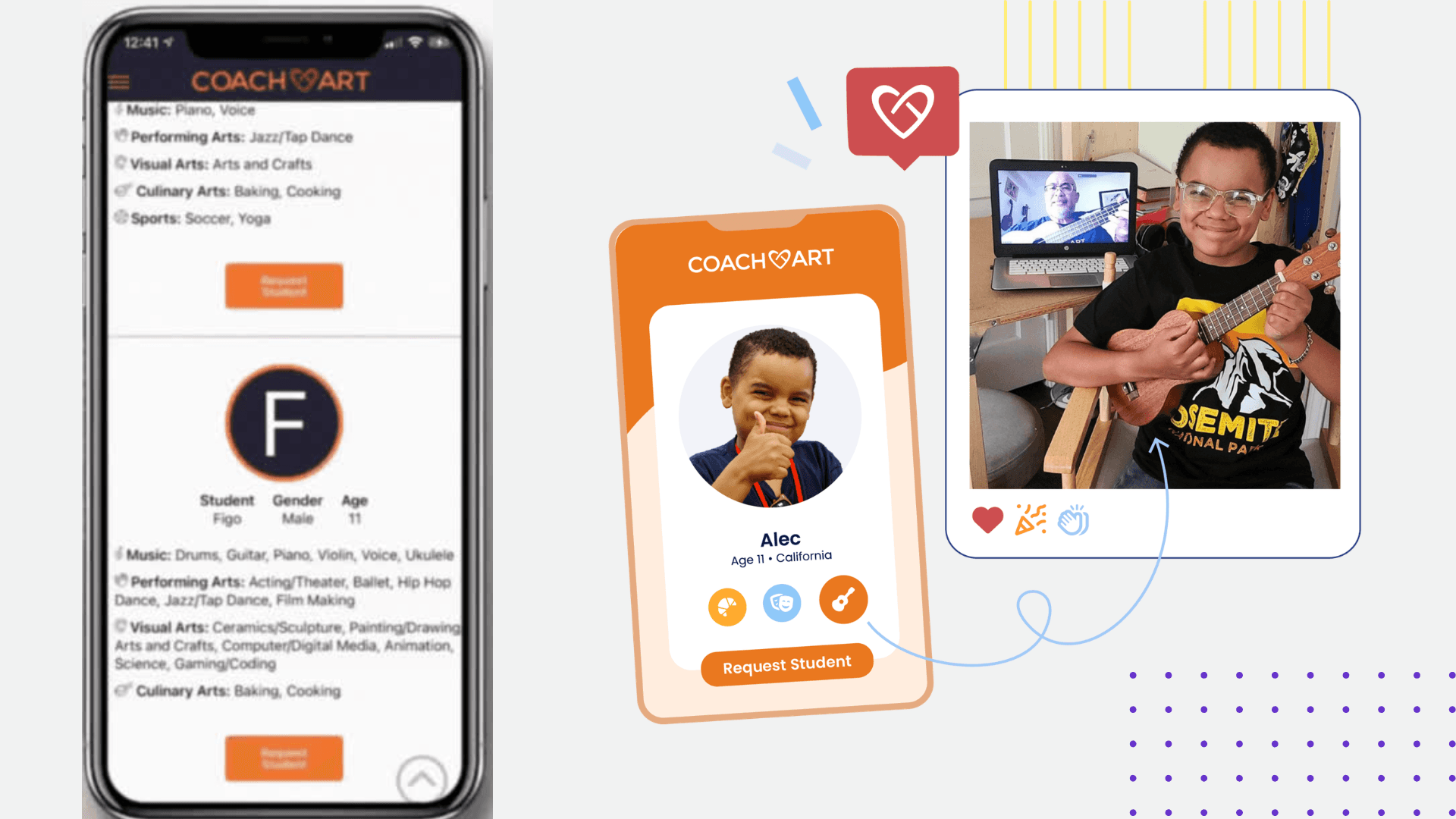
That's the language analytical donors are listening for.
Analytical donors aren't asking for a story. They're asking for the math behind the story.
Here's the structural piece. The development team didn't build that program model. Programs and operations did, with leadership pushing for the efficiency.
Without that substance to point to, there's no analytical-donor message to write.
Donor Type 2 — The Visionary Donor
Visionary donors aren't most interested in this year's program.
They're interested in where the org is going. They want to fund the trajectory, not the snapshot.
Their messaging comes from:
Long-term plans — your three-to-five year direction
Big goals — your North Star metric
Ripple effects — how the work changes the broader system, not just direct beneficiaries
At CoachArt, after we launched the app, we grew from about 8,000 to 40,000 lessons a year over six years. Roughly 37% annual growth. Expanded service nationwide in the same window.
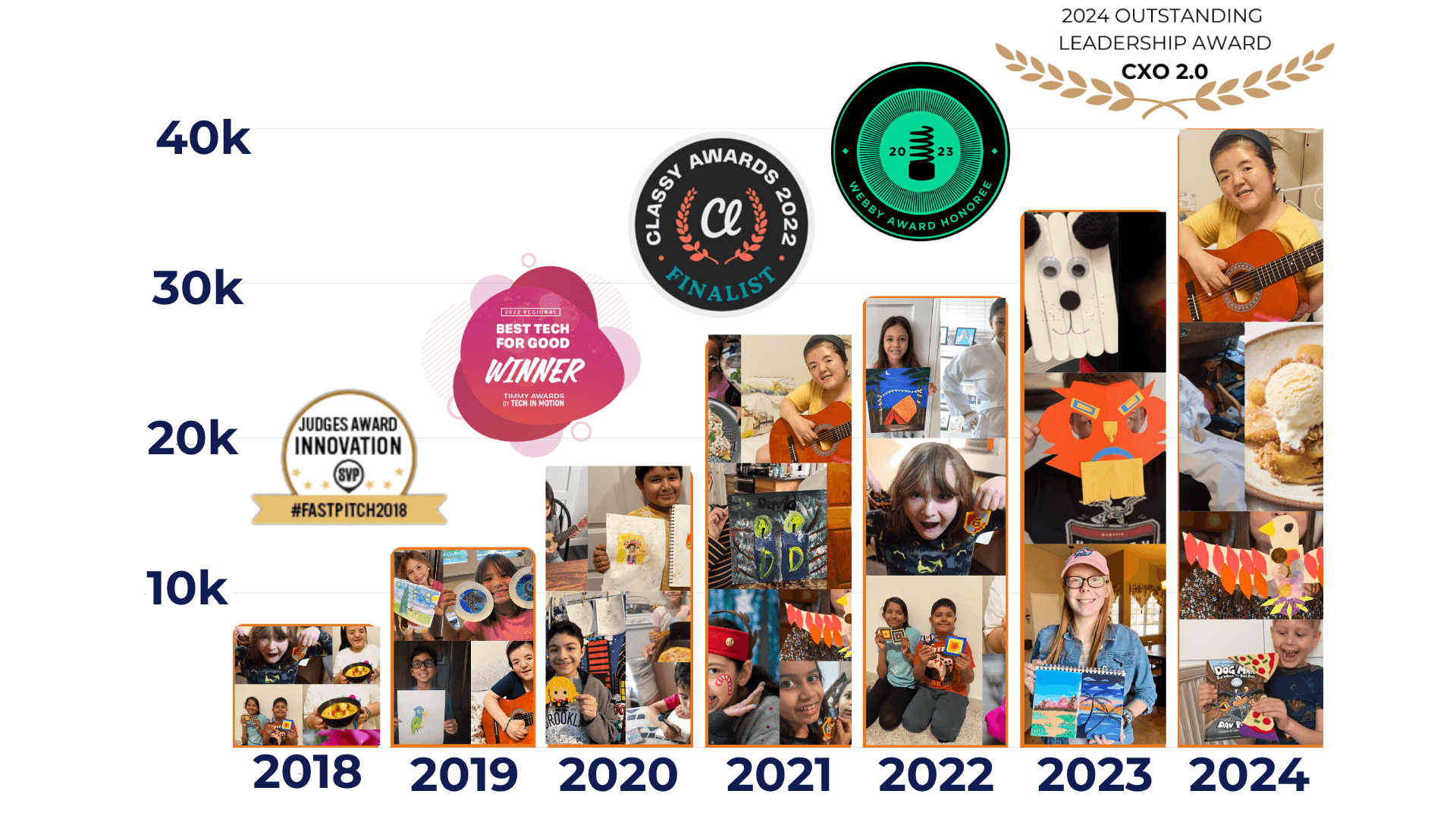
Visionary donors didn't want this year's report. They wanted the five-year picture and the path to get there.
A quick note on ripple effects, because this is where visionary donor messaging often gets stronger. Visionary donors connect to system-level impact more than individual impact. The question they're often asking is: how does the entire community get better when this mission is delivered well?
Most nonprofits don't have an answer prepared for that question. The ones that do tend to attract the donors most willing to fund the future.
A vision doesn't come from the development team. It comes from leadership — sometimes shaped with the board, sometimes refined in pitches to major institutional partners.
Without that vision articulated clearly, there's no visionary-donor message to write.
Donor Type 3 — The Technology Donor
This is the persona most development teams genuinely haven't built for yet.
We hear all the time that donors don't fund technology. Worth a small reframe: emotional donors don't fund technology. The donors who do fund it are different people — and they need a different invitation.
Their messaging comes from:
The tech you're already using
The tech you still need
How they can help — money, expertise, or both
At CoachArt we built a small group called Tech Advisors. Members made a small monthly donation into a pooled fund that was used exclusively to invest in the tech stack. In exchange, we brought our actual technology decisions to them — platform choices, build vs. buy, vendor evaluations. They advised.
It was almost a giving circle for technology. Funded by people who worked in tech and were excited to be useful.
The story isn't wrong. It just wasn't for them.
One thing worth naming: technology donors are often the most curious about how you'd actually invest the money. Which means having a real plan helps the conversation along.
That's part of why we feature Harness in Proimpact Picks. Harness pairs a modern fundraising platform with an embedded fundraising expert — so EDs can actually test new donor segments and run new campaigns without having to figure it all out alone. Worth a look if the technology donor section is hitting close to home.
Proimpact Picks · Featured ToolHarness: the platform built for EDs testing new donor segments
Harness pairs a modern fundraising platform with an embedded fundraising expert — so EDs can test new donor segments and run new campaigns without figuring it all out alone. Worth a look if the technology donor section is hitting close to home.
The tech roadmap, like the program model and the vision, doesn't come from the development team.
It comes from the ED setting strategic priorities for what the organization needs to invest in.
How to Start Building for All Three
Building for all three donor types is a multi-year effort.
But there are three small starting moves that don't require a strategic plan or a board retreat.
Audit your current donor base for these three types. Pull your top 25 donors and tag them: emotional, analytical, visionary, or technology. Most orgs find 90% sit in one bucket. That's the gap — and it's data, not a guess.
Identify the substance you already have. You probably have more analytical or visionary substance than you realize. Cost-per-outcome data. A North Star number. A growth trajectory chart. Find it before building new — most orgs are sitting on more than they think.
Pick one donor type to build for in the next quarter. Not all three. One. The fastest wins come from depth, not breadth — same lesson the Stanford research keeps pointing at.
This isn't a fundraising calendar exercise. It's a leadership audit. The question is: what substance is the organization producing, and which donor types can it actually invite in?
The Bigger Picture — Why This Sits at the Center of the Course
Building for all three donor types is what future-ready organizations look like.
An efficient program model. An ambitious vision. A real technology roadmap. These aren't fundraising tactics. They're the substance of a modern proimpact organization — and they happen to also be what donor-diversification actually requires.
That's why this sits near the center of the Proimpact ED System course.
It's free. Designed for nonprofit EDs. Built around the belief shifts, strategies, and tactics that produce the substance these donors are looking for. The wait list is open now.
Free Course for Nonprofit EDsThe Proimpact ED System — Waitlist Now Open
Built around the belief shifts, strategies, and tactics that produce the substance analytical, visionary, and technology donors are looking for. Free. Designed for EDs ready to build for all four donor types.
The conventional wisdom has been to diversify funding.
The data — and the donor-type reality — point somewhere different. Diversify funders. Get genuinely good at one or two revenue streams. Build the substance that lets you invite three more donor types into the work.
Same mission. Same offer. More of the right people.
Read more:



Load More